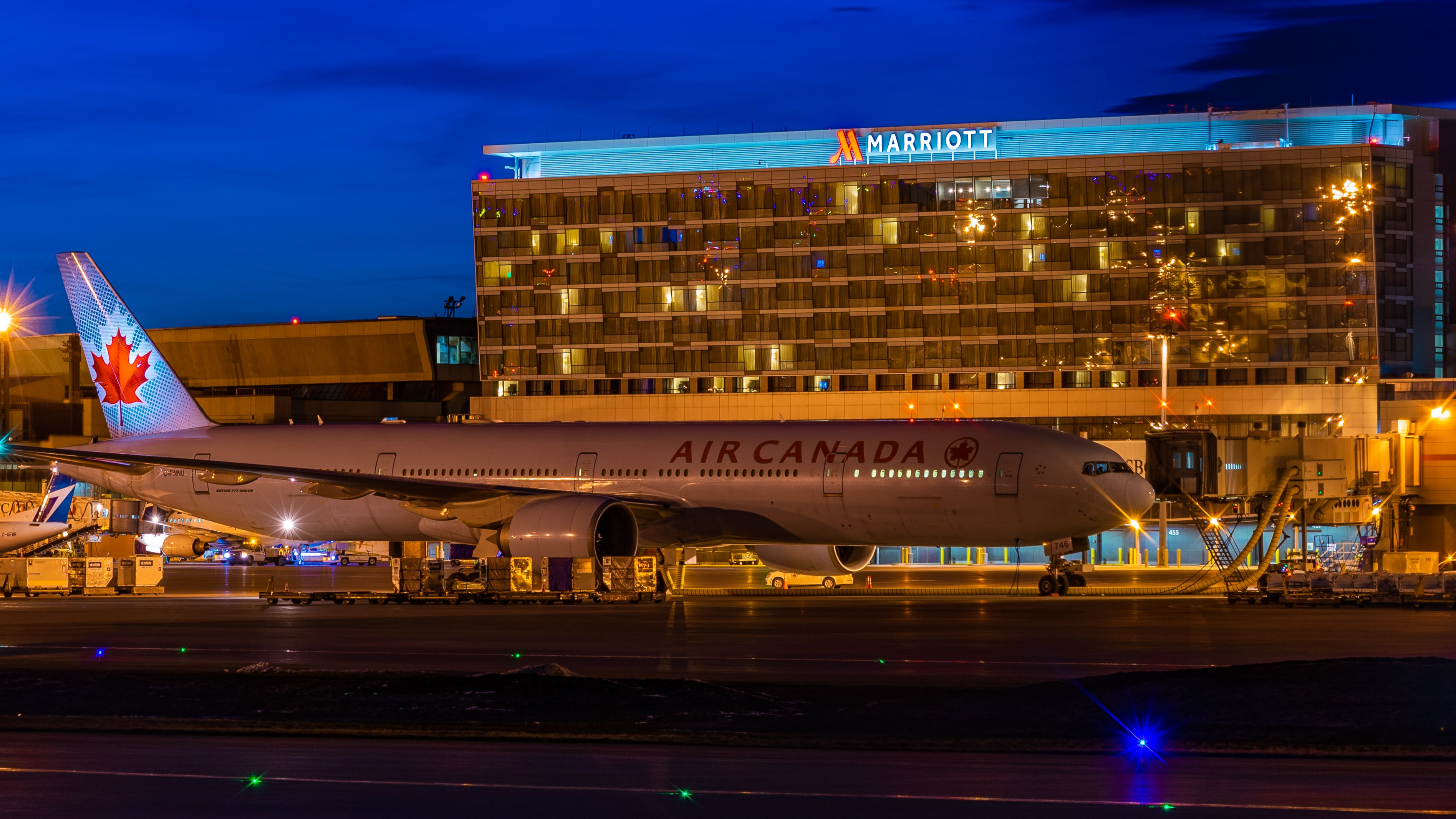

Air Canada releases these quarterly results
Aéro Emploi


Despite continuing to operate much below pre-pandemic capacity and at a loss of hundreds of millions of dollars, Air Canada sees promise on the horizon, with revenues above 2020 levels last quarter.
Domestic leisure reservations have begun to recover, but business travel is still down across the board due to the prevalence of remote work.
“We’re witnessing a strong rebound in VFR (visiting friends and relatives), and leisure traffic remains strong, specifically within North America, across the Atlantic, and to sun destinations,” chief operating officer Lucie Guillemette told.
“We were pretty confident that come 2022 corporate Canada returns to their offices and business travel should return. But no doubt that for us, business has lagged a little bit.”
Revenue nearly quadrupled year on year to $2.10 billion in the fiscal third quarter ended Sept. 30, accompanied by an 87% increase in capacity. However, revenue and capacity remained more than 60% and two-thirds, respectively, lower than Air Canada's third-quarter results in 2019, as the COVID-19 impact continues to wreak havoc on carriers' bottom lines.
“There’s no textbook on this type of recovery or any in the history. There’s no doubt we’re very encouraged by what we see. And there’s no doubt that the length of the recovery has moved in from the consensus of 2025 to at least 2024 and maybe 2023,” chief executive Michael Rousseau said.
In its prediction, the country's largest airline stated that it intends to raise fourth-quarter capacity by approximately 135% compared to the same quarter in 2020. Fourth-quarter capacity is predicted to fall 47% when compared to the same period in 2019.
Rousseau also emphasised this year's record freight performance of well than $1 billion. Last spring, the carrier began transitioning to air freight, converting many of its retired Boeing 767 jetliners to cargo planes.
Air Canada posted a $640 million loss in the third quarter, despite nearly tripling operational revenue year over year.